top of page

Updated: Aug 11, 2023

Forgive me world for all my little jokes, and I'll forgive you for this great, big one. This statement based on a line from the work of Robert Frost sums up the spirit of the Humorist. The light-hearted wisdom and the infectious joy of the Humorist make it one of the most popular archetypes loved by all.


In this short report, we cover:


Understanding the Humorist

Humour as an aesthetic quality


Humorists will tell you that everything is perspective. In their shape-shifting genius for using the moment, Humorists can flip even the most terrifying truths into angles so absurd that you take them in effortlessly, often while laughing. Infectious and beloved, Humorists bring joy to the downhearted, colour this world fun, and puncture rigidity with unabashed playfulness. They simplify and lighten things up, changing perspectives with remarkable dexterity, cunning, and cleverness.


The Humorist is the personality archetype that builds connections through fun, laughter and joy. Humorists can be both chaotic and helpful, blurring the lines between good and bad; in fact, boundary-crossing is very much in their comfort zone. The Humorist operates within a spectrum going from cheerful, joyous, funny, mischievous and irreverent, to downright obnoxious. 


Although known as the fool, the jester, the trickster, clown, prankster, and through many other names, we call this archetype ‘the Humorist’ to avoid biases. The Humorist is at the base of brands and characters that build connections through laughter, joy, and play. Humorists can break down walls between people even in the most tense situations. It’s one of the most universal archetypes, appearing in stories, fairytales, folklore, and fables belonging to all cultures in the world. Famous examples include Loki from Norse mythology, Krishna from Hindu stories, Kitsunē from the far east, coyote from indigenous American culture and the jackal from South Asian folklore.


“He [the Humorist] is a forerunner of the saviour, and, like him, God, man, and animal at once. He is both subhuman and superhuman, a bestial and divine being, whose chief and most alarming characteristic is his unconsciousness… He is so unconscious of himself that his body is not a unity, and his two hands fight each other.” — Carl Jung, C.W. Vol. 9.1: On The Psychology of the Trickster Figure


We discovered the Humorist archetype from the twelve human personality archetypes derived from the works of Carl Jung. Jung's theory of archetypes is a concept from his analytical psychology that suggests that there are universal, innate, and symbolic patterns or themes in the collective unconscious of humanity. These archetypes are fundamental elements that shape human experiences, behaviors, and emotions, and they often appear in myths, dreams, and cultural narratives. When it comes to branding, Jung's theory of archetypes can be applied to create consistent brand identities that connect with audiences at an emotional level; they’re particularly useful to build storytelling frameworks. We help businesses that want to connect with their audience through a sense of humor, laughter and good cheer to incorporate the Humorist archetype into their stories.


The core of the Humorist

The Humorist is the personality archetype characterized by fun. It also has traits such as cleverness, mischievousness, unpredictability, and a tendency to challenge what’s considered sensible and civil. They often use humor, wit, and cunning to outsmart others and navigate difficult situations. 


In society, Humorists also hold an important revelatory function. Consider the universal role of the court jester—a cultural figure who, both in the East and the Wester, had the sacred and dangerous role of voicing to the monarch what others could not. Humorists have a knack for playing between what is and what ought to be and subverting established interpretations. 


Humorist identities build strong associations with humor, play, fun, and happiness. When it comes to brand storytelling, these associations become important considerations to decide how a brand may want to connect with their audience.


For all our superior intelligence, reason, science and logical methodology, there comes a point where those bridges no longer continue; where the unexplored viewpoints lie beyond our sensibilities. This is the domain of the Humorist.


Humorist brand stories

Stories for Humorist brands can, obviously, be funny. Making their audiences chuckle, these stories carry the infectious energy of Humorists, making them highly shareable and engaging. But, those are not the only kind of stories that are appropriate for Humorist brands. This archetype is known for its ability to be in the moment, keep their minds free of worries and stay light. Stories that capture this mindset suit Humorist brands really well, and are particularly useful for businesses that may want to maintain a degree of seriousness; the wisdom of the Humorist, of being mindful and in the moment,  can help lift audience moods and establish a meaningful connection. Stories that channel happiness and induce simple joy are also typical of Humorist brands.


We think the type of humor appropriate for a brand should weigh on several factors; like its values and the other key brand archetypes. For example, a brand with a Humorist-Sage archetype pairing may lend to stories that bring in wit and language manipulation with clever wordplay, puns, and linguistic twists that highlight the intellect, sharp thinking and tact. 


A Humorist-Rebel archetype pairing in a brand will do well with stories that bring in satire and social commentary that basically adds fuel to the fire with both archetypes’ tendency to criticize and mock societal norms, behaviors, and authority in general; these kinds of stories can even take more serious tones despite the humor, if they are designed to provoke thought and encourage change. The Humorist-Creator archetype pairings effortlessly lead to stories that highlight both archetypes’ ingenuity; sarcasm and irony that reveal the disparity between the words spoken and the intended meaning. Absurd, surreal, bizarre or nonsensical situations challenging conventional logic and reality are true to the Humorist-Magician pairing, building whimsical joy and wonder in the audience. Remember, these are not hard-and-fast rules, but patterns and norms we’ve observed in our experience with brand identities and stories; each brand needs to be considered in its own right and context.


In our work, we’ve had to apply the Humorist archetype to completely different brands from furniture retailers to restaurants, and yoga gurus to artists. We’ve found that the Humorist archetype lends to brand identities that are quirky and fun, as well as those that come across as wise or joyous. 


Humor as an aesthetic quality; the hāsyam rasa


We have to make a special note about brands without a Humorist archetype adopting a sense of humor in its stories. As part of the universal human spectrum of emotions, humor is accessible to all types of personas. However, it needs careful consideration and we recommend all brands consider their values and key traits of the identity before they jump on the next trend of funny videos. If you’re bringing humor in as a tactic to build engagement with your story, we find it's particularly important to consider the audience's preferences and cultural context. This will help you decide what kind of humor your story should incorporate. For example, making fun of yourself lends to creating a quirky and endearing connection with the audience, while finding humor in the mundane aspects of life usually adds to building shared experiences and relatability. 


Consider your brand carefully before incorporating humor into your stories. Wondering whether your brand’s humor should be dark or induce amusement through the second-hand embarrassment of cringe? Start by asking why you want to use humour in the first place. If the answer is for engagement or that funny trend that seems to get more views, make decisions considering your audience and their culture. If the answer is that you think your brand may actually be a Humorist and humour should become a dominant aspect of your storytelling, it’s probably time to unpack this with a Brand Articulation Framework.


Humor is a great connector and a leveller. This definitely makes it a fantastic way to link with your audience. For brands, being funny is worth consideration in all seriousness.





We use archetypes to translate characteristics of a business into relatable and easily identifiable personas. Because people relate to other people, and when a business is personified, it is distilled it into an easily understood form. 


Jungian Archetypes have universally recognized patterns that we can see as different personas manifesting in the human psyche. Carl Jung, the Swiss psychiatrist and founder of analytical psychology, introduced archetypes at the beginning of the 20th century.


There are twelve archetypes in total; 


Archetypes are shared psychological patterns, symbols, and instincts that all humans have; innate, repeated, universal patterns or templates of the human experience. Like the Trickster archetype that comes through in mischievous and playful characters in stories; the Hero archetype representing those who rise to a challenge embarks on a journey, and overcomes obstacles; or the wise old woman or man connecting to the Sage archetype who guides the hero with their knowledge, or the leader who restores balance in stories, channelling the good side of the Ruler archetype. These archetypes are found in myths, dreams, literature, and art across different cultures and periods to evidence their universal nature; they trigger near-unanimous emotions and ideas in people. While Jung’s theories are not commonly used for psychotherapy per se, they provide an excellent base for building brands and characters in stories. When it comes to storytelling for business, these archetypes are great tools. Archetypes based on Carl Jung’s theories are one of the primary tools used to articulate brands by Public Works.


Carl Jung theorized that the human mind inherits these archetypal patterns through what he coined as the ‘collective unconscious’. According to Jung, the (human) collective unconscious is populated by instincts and archetypes. It’s a treasure trove of symbols.


We use these archetypes to typify personalities for story characters or to help our clients construct a brand articulation framework (BAF) for their business or project.


To see how we used the dark side of archetypes to build an entire story series,

check out our shadow series

As an archetype-based persona, visual and written language can easily be identified and articulated with more accuracy and clarity. We think archetypes are one of the most efficient starting points to communicate a brand, brief creatives and build stories.


Utopian

  • Values: Peace, positivity, and happiness for everyone

  • Strength/Weakness: Dream of paradise even through the worst state of affairs. Naive, idealistic, and impractical. 

  • Driving desire: Exploring self/world

  • Way of doing things: Inextinguishable faith. Their charm is their innocence. Paradise is a state of mind. The utopian delivers hope.

  • Distinguishable traits: Goodness, faith, hopefulness.

  • Popularly associated rasa(s): Empathy, tranquillity, beauty, humour, wonder 

  • Character examples: Samwise Gamgee of Lord of the Rings, R2D2 and C3PO in Star Wars, and Obelix from Asterix and Obelix.

  • Brand examples: Coca-cola, Dove, The Good Market 


Sage

  • Values: Knowledge, truth, understanding

  • Strength/Weakness: Offers clarity and wisdom, a voice of truth against ignorance and misinformation. Cold and arrogant cynics who consume knowledge for the sake of knowledge.

  • Driving desire: Exploring self/world

  • Way of doing things: The sage is driven by the motivation to find out the truth. Pursues truth and understanding. The sage delivers clarity.

  • Distinguishable traits: Intelligent, curious, informed, insightful.

  • Popularly associated rasa(s): Wonder, heroism, terror 

  • Character examples: Gandalf in Lord of the Rings, The Oracle in Matrix, and Professor Calculus in Adventures of TinTin. 

  • Brand examples: Google, TED, Public Works


Explorer

  • Values: Freedom, adventure, and authenticity

  • Strength/Weakness: Unbound, self-sustained, strong and true to self. In their shadow self. Is flakey, unable to commit or make decisions, and reckless. 

  • Driving desire: Exploring self/world

  • Way of doing things: They set out to discover the world with unstoppable passion. The explorer delivers inspiration for freedom.

  • Distinguishable traits: Active, adventurous, driving discovery.  

  • Popularly associated rasa(s): Beauty, wonder, heroism, terror 

  • Character examples: Arya Stark in Game of Thrones, Sam Gardner in Atypical, Indiana Jones. 

  • Brand examples: GoPro, Patagonia, Roar


Rebel

  • Values: Liberation, risk-taking, and challenging the status quo

  • Strength/Weakness: At the frontlines of all historic movements. Troublemaker, provocateur, and rebel without a cause.

  • Driving desire: Being remembered

  • Way of doing things: Disruption or change of old systems to pave way for the new. The rebel delivers revolution. 

  • Distinguishable traits: Revolutionising, nonconformity and radical.

  • Popularly associated rasa(s): Humour, heroism, terror, fury, revulsion 

  • Character examples: Wolverine in X-Men, Robin Hood, Katniss Everdeen in Hunger Games

  • Brand examples: Supreme, Anonymous, Vans


Magician

  • Values: Wonder, transformation, and defying the standards

  • Strength/Weakness: Uses their catalytic abilities and transformational power to save the day even in the most impossible situations. Abuses this power and becomes manipulative. 

  • Driving desire: Being remembered

  • Way of doing things: Uncovering the secret mechanisms of the world in order to pull strings and make things happen. Surprising/mystifying with solutions that others can barely comprehend. The magician delivers what was thought to be impossible.

  • Distinguishable traits: Making the impossible happen, win-win solutions, being catalytic.

  • Popularly associated rasa(s): Wonder, heroism, terror 

  • Character examples: Yoda in Star Wars, Eleven from Stranger Things, Albus Dumbledore in the Harry Potter series

  • Brand examples: Tesla, Polaroid, MAC cosmetics

To read more about this archetype click here.


Hero

  • Values: Mastery, courage, willpower

  • Strength/Weakness: Courage, motivation and facing fears despite being nervous or anxious. Overconfidence, arrogance. 

  • Driving desire: Being remembered

  • Way of doing things:  Courageously rise up to challenges and shoulder burdens that most would not dare to. The hero archetype delivers reliability.

  • Distinguishable traits: Determination, bravery, and always coming through

  • Popularly associated rasa(s): Wonder, heroism, terror, fury 

  • Character examples: Casey Gardener in Atypical, TinTin from Adventures of TinTin, Bianca Barclay in Wednesday

  • Brand examples: Kāffi, FedEx, Nike


Lover

  • Values: Enjoyment, vitality, passion for life and experiences

  • Strength/Weakness: The lover archetype’s strength is its ability to devote, and fulfill,  experiencing life at the fullest. Its weakness is losing itself to the beloved and becoming obsessive.

  • Driving desire: Connecting with others

  • Way of doing things: Makes others feel appreciated and special, fostering unforgettable connections. The lover archetype delivers devotion. 

  • Distinguishable traits: Passion, intimacy, and enjoying/experiencing life in high definition. 

  • Popularly associated rasa(s): Beauty, empathy, tranquillity 

  • Character examples: Morticia Addams in Wednesday, Pepé Le Pew in Looney Tunes, Matty Matheson the chef 

  • Brand examples: Rithihi, Häagen-Dazs, Victoria’s Secret


Humorist

  • Values: Joy, humour, living in the moment

  • Strength/Weakness:  In its wisdom, this archetype crosses boundaries and exposes the folly of human superiority, bringing us to understand the fragility of the status quo, and the absurdity of life. In its shadow, the humorist is irreverent and refuses to accept responsibility. 

  • Driving desire: Connecting with others

  • Way of doing things: Using humour to break down social constructs and laughter as a response to the absurdity of life. The humorist delivers entertainment.

  • Distinguishable traits: Play, fun, and joy 

  • Popularly associated rasa(s): Humour, wonder, heroism, revulsion 

  • Character examples: Captain Jack Sparrow from Pirates of the Caribbean, Rue in Euphoria, The Joker from Marvel Comics

  • Brand examples: Old Spice, ApiHappi, Fanta

To read more about this archetype click here.


Everyperson

  • Values: Earnestness, empathy, equality

  • Strength/Weakness:  The everyperson archetype is unifying and levelling, with a remarkable capacity for building empathy and connections. At its worst, the everyperson is a passive participant in groupthink, never questioning the herd.

  • Driving desire: Connecting with others

  • Way of doing things: Valuing community and being part of the group over carving out a singular identity, the everyperson archetype delivers belonging.

  • Distinguishable traits:  Always doing the right thing and finding common ground with others.

  • Popularly associated rasa(s): Empathy spectrum, tranquillity, beauty, humour 

  • Character examples: Gale Hawthorne from Hunger Games, Samwell Tarly from Game of Thrones, Ned Flanders from the Simpsons

  • Brand examples: Ikea, eBay, Perera & Sons


Ruler

  • Values: Responsibility, influence, leadership

  • Strength/Weakness: The ruler archetype is powerful and influential, leading their circle towards order, safety and success. In its shadow, the ruler can be imposing, authoritarian and downright tyrannical.

  • Driving desire: Contributing to the world

  • Way of doing things: Gaining power, moderating and exercising control. The ruler archetype delivers esteem.

  • Distinguishable traits: Stepping up to take charge, influences order and success.

  • Popularly associated rasa(s): Heroic, terror, fury 

  • Character examples: Julius Caesar in Asterix & Obelix, Aragorn in Lord of the Rings, Daenerys Targaryen in Game of Thrones

  • Brand examples: Mercedes-Benz, Lion beer, Rolex


Creator

  • Values: Creativity, inspiration, and ingenuity

  • Strength/Weakness: A person looking to influence the world through their creativity. In their weakness, the creator becomes a perfectionist, obsessing over unattainable heights and is never satisfied. 

  • Driving desire: Contributing to the world

  • Way of doing things: The defining superpower of the creator archetype is to make the world their muse, absorb it and reproduce it new, made more interesting and beautiful inside their mind. The creator delivers freshness and ingenuity.

  • Distinguishable traits: Innovation, imagination, and creative expression

  • Popularly associated rasa(s): Wonder, heroism

  • Character examples: Tony Stark from Iron Man, Kevin Macallister from Home Alone, Don Draper from Mad Men

  • Brand examples: Public Works, Youtube, AOD


Caregiver

  • Values: Kindness, care, safeguarding

  • Strength/Weakness: The caregiver brings an incredible affinity and capacity for helping, protecting, nurturing and caring for others. In their shadow, the caregiver archetype is smothering and controlling.

  • Driving desire: Contributing to the world

  • Way of doing things:  The caregiver archetype believes in nurturing and protecting what matters. This archetype delivers safety, care.

  • Distinguishable traits: service, compassion, and protection.

  • Popularly associated rasa(s): Empathy, tranquillity 

  • Character examples: Elsa Gardener in Atypical, Primrose Everdeen in Hunger Games, Obi-Wan Kenobi in Star Wars

  • Brand examples: Unicef, HelpAge charity, Volvo

To read more about this archetype click here.


To experience how we use archetypes to build stories, subscribe to our monthly stories here.


Looking at how emotions fill the gap where words and pictures fail, we started analyzing the significance of emotions in communication.


Emotions are so, so, essential to stories. Are emotions the first language? Infants communicate by expressing raw emotions well before they acquire language. When people from distinctly different cultures interact, you can observe how facial expressions and gestures showing emotions are enhanced and sometimes even exaggerated in attempts to clarify more information without relying on verbal language. 


"Someone may forget what you said, but they will never forget how you made them feel." Maya Angelou


Without an emotive quality, communication becomes purely a rational transfer of data—like a research paper; this can certainly communicate and even form insights. But, without emotions, these digits and facts will not remain glued together as one cohesive story or idea in the average human mind. Emotions are such an inherent part of being human, that we find they form an essential layer in communication, making information memorable and relatable. In our experience, establishing connections with the audience is impossible without the use of emotions. 


“After a major bank introduced a credit card for Millennials that was designed to inspire emotional connection, use among the segment increased by 70% and new account growth rose by 40%.” Harvard Business Review, The New Science of Customer Emotions


We think emotions are significant to brands and storytelling; they form the basis of connections that evolve into loyal audiences.We've come to understand what a business can make consumers feel is linked to how people remember that brand. It can also influence how they connect desires and emotional needs to what that business has to offer.


We use the Eastern philosophy of ‘rasas’ to identify a spectrum of emotional objectives for a story. The rasa of a story is the emotive outcome that the audience experiences as a consequence of the story; what the story makes you feel.


The classical Rasa Theory: originated in India around the first century BCE in the drama treatise Natyashastra. Since then, it has been widely adopted by other art forms from poetry to film. ‘Rasa’ is the ‘emotional flavour’ of any creative work, evoked in the minds of the audience through deliberate triggers made by the creators.


Classic nine rasas: Sringāra, Adbūtha, Karunā, Bhayānaka, Bhībhatsa, Raudra, Sāntam, Hāsyam, and Veeram.


For story storytelling, we look at a much wider spectrum. For example, the bhayānaka (fear) rasa can range from apprehension to blood-curdling terror. We also observe the polarities of each rasa considering both the negative and the positive characteristics such as the sorrow and compassion characteristics of the karunā (empathy) rasa.


Nine emotional ranges that we have adapted and expanded from the rasa theory.

  1. Sringāra: Desire, bliss, and love

  2. Adbūtha: Surprise, wonder, and amazement

  3. Karunā: Empathy, nostalgia, and pensiveness

  4. Bhayānaka: Submission, fear, and awe

  5. Bhībhatsa: Aversion, contempt, and loathing

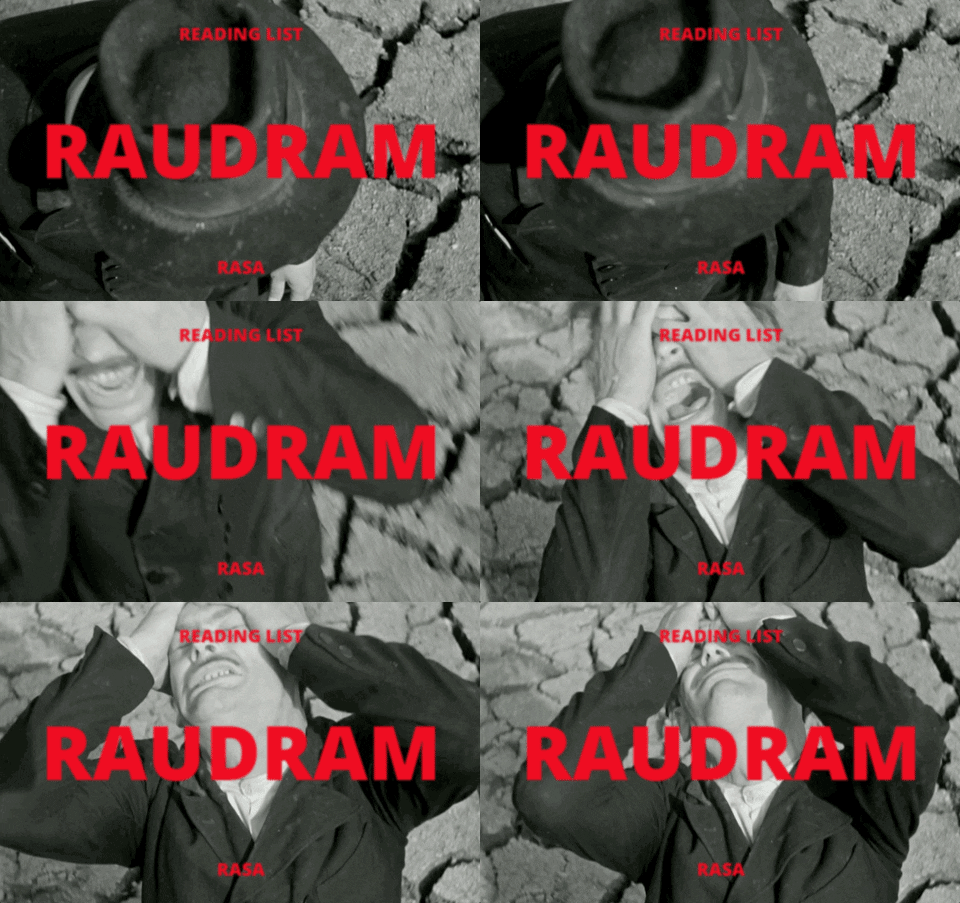
  6. Raudra: Aggression, fury, and outrage

  7. Sāntam: Contentment, tranquillity, and serenity

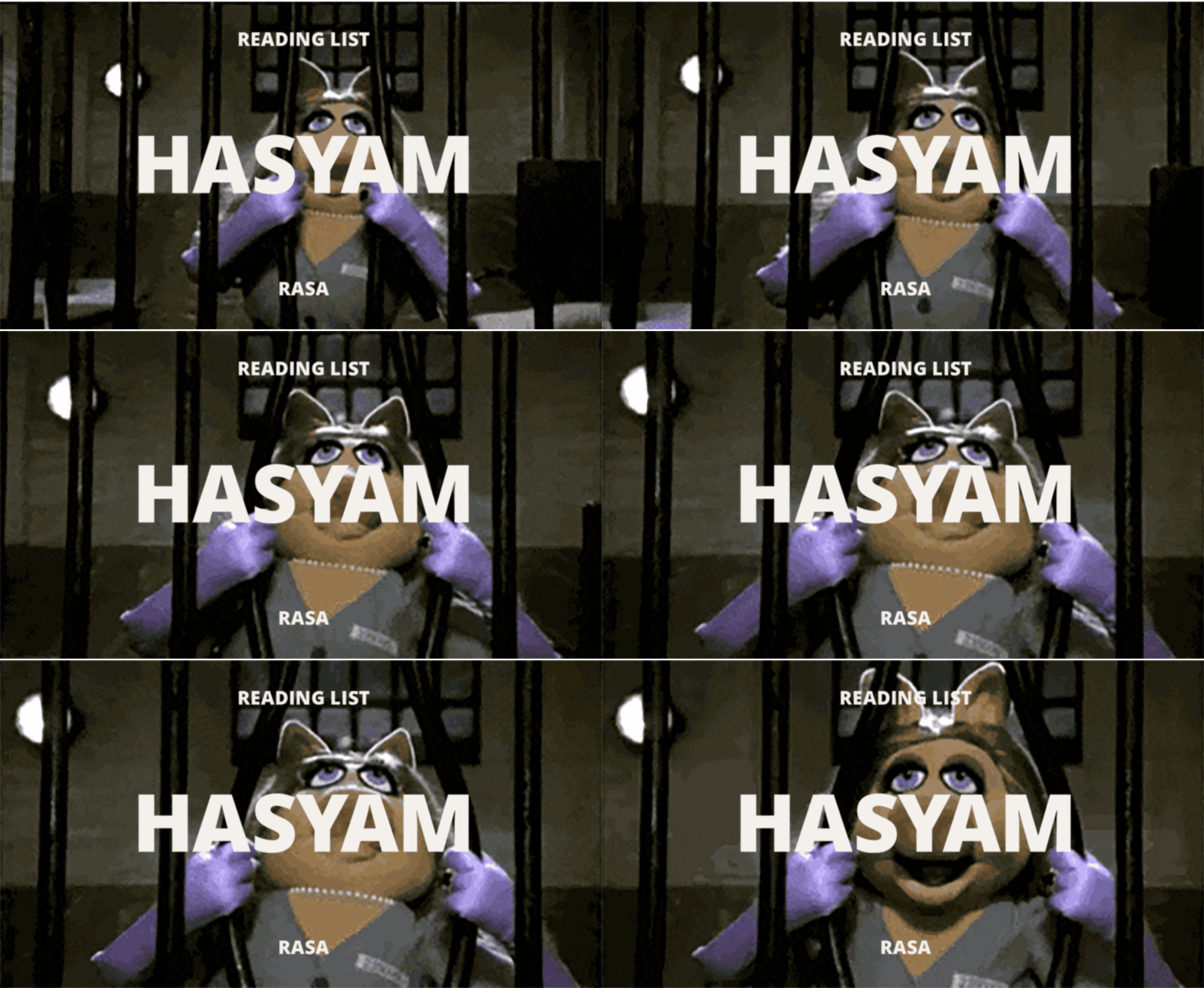
  8. Hāsyam: Optimism, amusement, and delight

  9. Veeram: Anticipation, confidence, and inspiration


We created a series of monthly stories as a way to practice and explore the scope of story archetypes and rasas. Our monthly stories are where we like to play, blurring the lines between commercial and artistic storytelling. We create supplementary reading lists as a way to investigate the archetypes and rasa scope of the story.


Even when we’re exploring beyond the original theory this way, we still find profound cues to each rasa expression in the art form where it was born—classical Indian drama. Dramatic expressions of each rasa are among our strongest cues to how they can be evoked; like the shrinking expressions connected to bībhatsa (Aversion, contempt, and loathing) which led us to discover it beyond the emotion of ‘disgust’ usually attributed to this rasa, and find it in evocations like humility. 


When considering a story rasa, we first recommend identifying emotions relevant to the brand articulation framework (BAF) for your business.


Does your target audience respond more to stories that inspire awe, radiate friendly warmth, or do they evoke a sense of empathy? 


The rasa theory allows us to decide whether a story should be tranquil or erotic, terrifying or funny, or a mix of wonder and heroism. It’s become one of our most used storytelling tools. We use these tools to create stories that come to life as books, spaces, prints, merchandise, and digital content.  


To experience how we use rasas to build stories, subscribe to our monthly stories here.

bottom of page